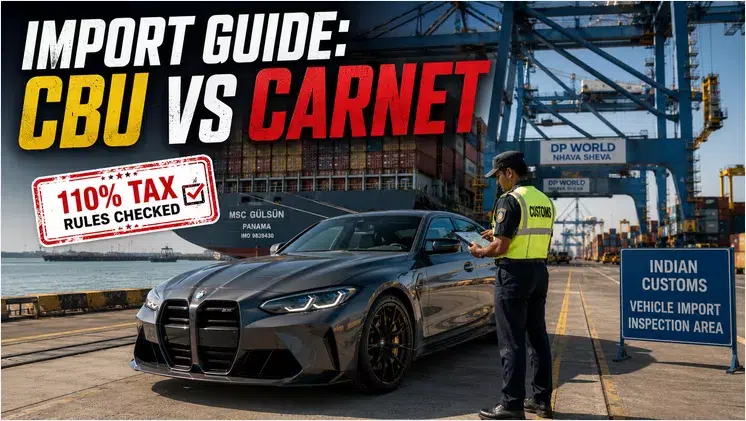
Hello, structural thinkers and international car hunters! Welcome back to SankarStore.in. I am Sankar, and as a mechanical engineer, my goal is to strip down the complex international logistics framework, trade tariffs, and transport compliance laws to show you exactly how global machinery lands on domestic soil.
In our main series guide, Tesla Cybertruck Price in India 2026: Specs, Interior, & Ultimate Review, we revealed that because certain specialized machines are built strictly for overseas left-hand-drive markets, getting them onto Indian tarmac requires navigating private channels.
Whether you are looking to bring over an exotic electric vehicle, a bespoke hypercar, or a heavy-duty truck, executing a private vehicle import to India requires strict compliance with clear legal procedures. Let’s break down the two main pathways used to clear customs: permanent CBU routing and temporary Carnet permits.
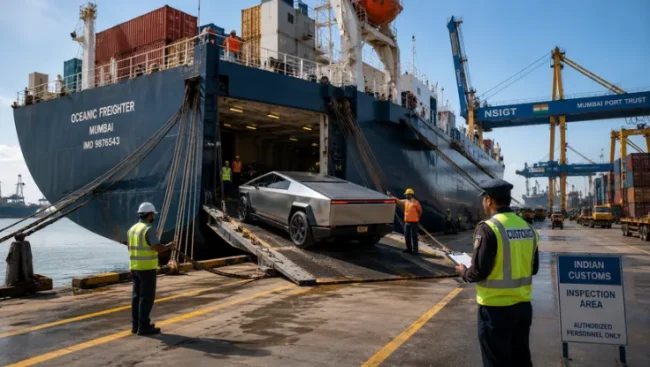
Table of Contents
Pathway 1: The Permanent Import Routine (CBU)
When you decide to permanently add an international vehicle to your garage collection in India, it enters as a CBU (Completely Built Unit). This is a highly regulated commercial process managed under the Directorate General of Foreign Trade (DGFT) guidelines.
🚗 Join the SankarStore AutoHub!
Don't miss out on the latest auto updates, price hikes, and real-world engineering reviews. Join our community for instant alerts!
1. Structural Port Entry Restrictions
You cannot simply ship a vehicle to any beach or inland dock. The Indian government restricts private passenger vehicle entries strictly to primary deep-water naval ports equipped with dedicated automotive inspection bays:

- Mumbai (JNPT)
- Chennai
- Kolkata
2. The Mechanical Criteria Box
To pass the initial gate inspection, a permanently imported vehicle must be brand new (never loaned, leased, or registered anywhere globally) and must match specific regional infrastructure standards:
- The speedometer must natively track speeds in Kilometers per Hour (km/h), not miles.
- The headlamp beam pattern (photometry) must be adjusted for “keep-left” driving rules to avoid blinding oncoming traffic.
💸 The Permanent CBU Customs Duty Chain (Value > $40,000)
• Agriculture Infrastructure Development Cess (AIDC): +40%
• Integrated GST (IGST) & Surcharges: Standard Luxury Tariffs
• Total Effective Duty Bracket: ~110% to 115% of original cost
This massive financial barrier explains why an elite vehicle costing around ₹84 Lakhs internationally scales all the way up past ₹4.50 Crore by the time it is permanently registered with a local RTO.
The Big Hurdle: Is Importing Left-Hand Drive (LHD) Cars Legal?
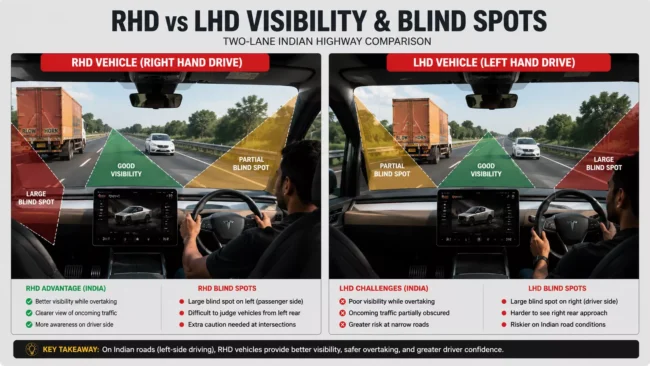
This is where many custom applications stall. Under the Central Motor Vehicle Rules (CMVR), permanently registering a Left-Hand Drive (LHD) vehicle for regular commercial use in India is generally restricted. India’s road infrastructure is designed entirely around Right-Hand Drive (RHD) safety visibility. Overtaking or turning in a massive left-hand drive vehicle forces the driver to rely heavily on advanced blind-spot sensor arrays or external camera displays, rather than a clear physical line of sight.
Permanent registration exemptions for LHD platforms are rare, typically restricted to foreign diplomats, specific government-approved testing programs, or unique vintage display vehicles.
Pathway 2: The Carnet Permit Route (Temporary Window)
If you have ever spotted a left-hand drive international car or truck rolling freely through city car meets with foreign registration plates, they bypassed the restrictions above using a Carnet Permit—specifically a Carnet de Passages en Douane (CPD).

✈️ The Temporary Carnet Framework
1. How the Passport for Vehicles Works
A Carnet acts exactly like a temporary tourist visa for a car. Issued by authorized international automobile associations abroad (like the ATC or FIA), it allows a vehicle owner to legally cross Indian custom borders without paying the permanent 110% import tax.
2. The Catch: Security & Re-Export Laws
To secure a Carnet, the owner must leave a massive cash deposit or bank guarantee in their home country, often equal to or greater than the full value of the vehicle.
- The 6-Month Timer: The vehicle is legally allowed to drive on Indian roads for a maximum of six months.
- Strict Enforcement: Once that timeframe wraps up, the vehicle must be physically re-exported out of India through a customs port to clear the logbook. If the owner fails to export the car or tries to sell it locally, Indian Customs will confiscate the vehicle, seize the massive bank deposit overseas, and levy heavy legal penalties.
Sankar’s Verdict: Which Pathway Makes Sense?
From an automotive and supply-chain engineering standpoint, bringing an un-inventoried vehicle into India is a complex logistical challenge.
If you are a collector looking for permanent ownership of a unique right-hand drive foreign car, preparing for the lengthy DGFT paperwork and the 110% CBU tax payment is your only legal route. However, if you are looking to bring an unconventional, left-hand-drive vehicle to showcase at major national events, using a temporary Carnet permit is the most practical, duty-free way to legally experience world-class automotive design on local soil.
Frequently Asked Questions (FAQs)
Can an individual permanently import a left-hand drive car to India?
Generally, no. Under current CMVR guidelines, permanent registration of left-hand drive (LHD) vehicles is restricted for regular public road use due to safety protocols. Permanent imports must be configured in Right-Hand Drive (RHD).
How long can a car stay in India under a Carnet permit?
A vehicle brought in under a Carnet de Passages en Douane (CPD) can remain in India for a maximum continuous period of six months. Following this window, the vehicle must be legally re-exported out of the country.
What is the total import duty percentage on a luxury car in India?
For luxury CBUs with an assessable value exceeding $40,000, the combination of Basic Customs Duty (BCD) at 70% and the Agriculture Cess (AIDC) at 40%, along with luxury surcharges, brings the total effective duty to a 110% to 115% bracket.

COMMENTS